
Designing Cities That Work with Nature
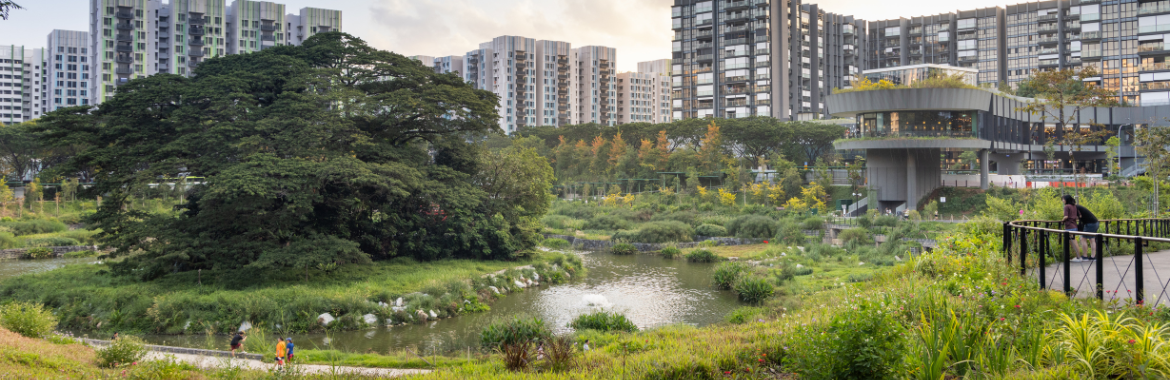
At the Water Expo@SIWW 2026, Dr Chi Bui, Vice President of the Climate Resilience Studio at CPG Consultants, shared how Living Infrastructure is reshaping the way cities respond to climate change.
Living Infrastructure is not simply about putting nature into a city. It is about recognising that nature itself can perform engineering functions. Rather than single-purpose engineering that we used to design, Living Infrastructure brings together nature, infrastructure and public spaces to build cities that are more resilient, liveable and adaptable.
Infrastructure Built for More Than One Job
Much of today’s infrastructure was designed with one goal in mind. One system, one purpose. Parks for recreation, reservoirs for storage, and drainage to move stormwater away as quickly as possible. But that was a different time when land was more available and climate was more predictable. These systems fulfilled their individual engineering functions, but they were rarely designed to work together.
Today’s cities face a different reality. More intense rainfall, rising temperatures and limited land mean infrastructure must perform multiple functions at once. Living Infrastructure responds by combining engineering, ecology and public spaces into one integrated system that delivers more from the same footprint.
When Nature Becomes Infrastructure
One of the most significant shifts in how we think about engineering is to see nature as an engineering asset, rather than as decoration, and to design solutions that become part of the natural system.
Wetlands filter stormwater naturally while providing habitats for wildlife. Urban forests reduce surface temperatures, improve air quality and strengthen biodiversity. Green corridors manage runoff while creating spaces for recreation and active mobility. Rather than relying solely on concrete and steel, Living Infrastructure integrates natural systems as part of the engineering solution, designed to slow runoff, filter stormwater, reduce urban heat and restore biodiversity.
When nature is brought into the design from the outset, cities can build infrastructure that is more resilient, multifunctional and adaptable, and far more valuable than a single-purpose system could deliver.
Every Square Metre Should Deliver More
As urban populations continue to grow, land has become one of the constrained resources in city planning. This demands a rethink of how infrastructure is planned: moving away from separate systems for separate functions, towards integrated solutions where every asset delivers multiple benefits.
Bidadari Park’s Alkaff Lake demonstrates what is possible within a single footprint. Rather than constructing dozens of separate underground stormwater tanks, the project consolidates district scale flood storage equivalent to approximately 12 Olympic-sized swimming pools, into a single integrated lake, that simultaneously serves as a community park, ecological habitat and recreational destination.
This is what multifunctional design looks like in practice. Infrastructure that does not compete for limited land, but is purposefully designed so that engineering, ecology and public life reinforce one another.
Building Infrastructure to Adapt, Not Just Last
Climate projections are not static. Sea levels will continue to rise. Rainfall patterns will shift. Infrastructure designed for a set of fixed conditions would likely be inadequate as those conditions change.
One of the key principles of Living Infrastructure is adaptability. Living Infrastructure is designed to perform effectively today while keeping future options open as climate risks and urban needs evolve. This includes creating floodable public spaces that provide additional stormwater storage during extreme rainfall. Land safeguarded and infrastructure stacking for future expansion or incorporating modular engineering solutions that can be upgraded without major reconstruction. By planning for change from the outset, cities can strengthen resilience over time.
CPG applied this principle in the City–East Coast Study, where coastal infrastructure is planned in phases, each intervention calibrated to current conditions but designed to accommodate future upgrades as sea level rise. Rather than a single fixed solution that may require extensive reconstruction within decades, the phased approach allows the city to respond incrementally, preserving both capital and flexibility over time.
The principle is clear: resilience is not only about making infrastructure stronger, but also about designing systems that can adapt as conditions change.
Better Cities Need Better Collaboration
Living Infrastructure cannot be delivered by a single discipline. Creating resilient, multifunctional systems requires engineers, architects, landscape architects, ecologists, urban planners, policymakers and communities to work together from the earliest stages of planning. By integrating diverse expertise early, projects can better balance engineering performance, environmental resilience and community needs.
At CPG Consultants, this multidisciplinary way of working is central to how we design. Our teams bring together expertise in architecture, engineering, climate resilience, landscape architecture and urban planning to develop integrated solutions that respond to real urban challenges. By connecting these disciplines from the start, we help cities create infrastructure that performs technically, works with nature and delivers lasting value for communities. As urban challenges become more complex, good infrastructure will be defined not only by engineering performance, but by how well different expertise and community needs are brought together to shape better outcomes.
From Hidden Infrastructure to Living Infrastructure People Can Actually Feel
Living Infrastructure changes how cities experience essential systems. What was once hidden in the background can become visible, accessible and part of everyday urban life.
When resilience, nature and public use are designed together, infrastructure can do more than protect a city. It can create places people value, from lakes that manage floodwater to wetlands, corridors and parks that support daily life.
As climate pressures grow, the opportunity is to design infrastructure that strengthens resilience while making cities more liveable. This is the promise of Living Infrastructure: systems that work harder, adapt better and make urban life richer.