
Modernising the Octagon: CPG Consultants led the Design Transformation of the Family Justice Courts
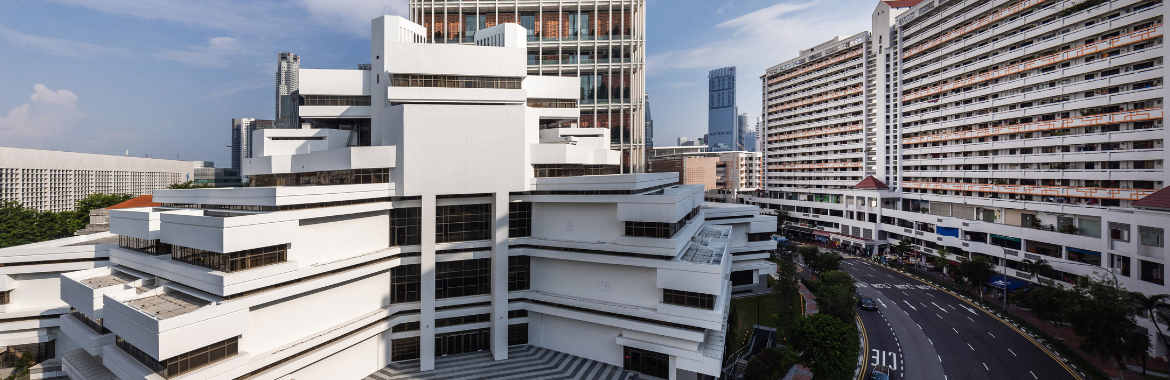
Drawing on its legacy of designing courthouses in Singapore, CPG blends conservation and adaptive reuse to transform the Octagon for the Family Justice Courts.
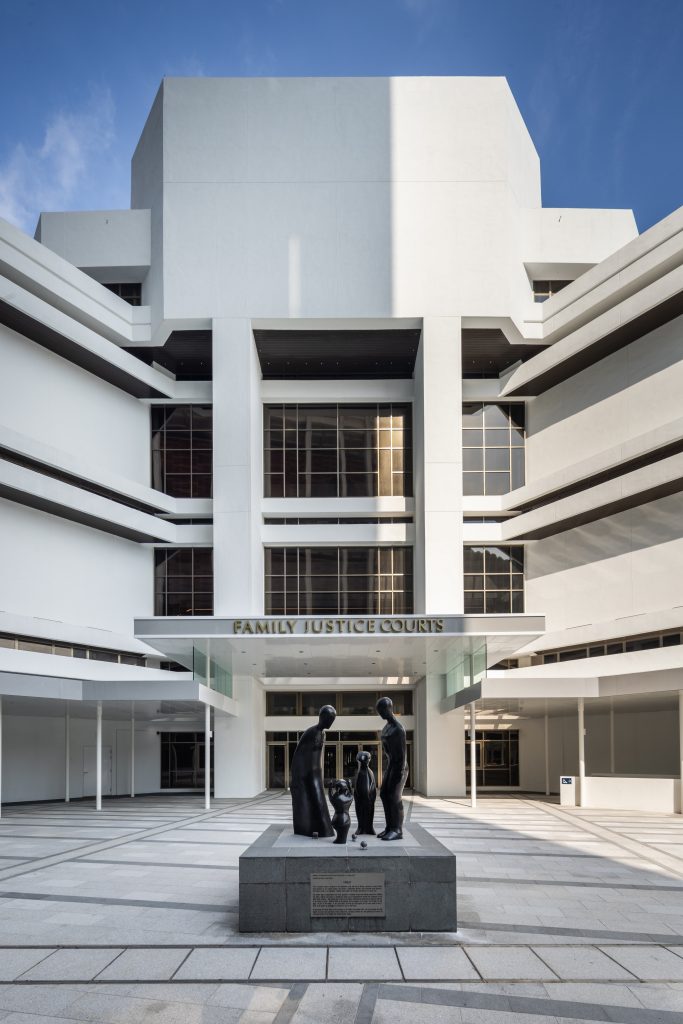
Singapore, 3rd February 2026 – The Family Justice Courts (FJC) began a new chapter at the iconic Octagon building, with an official opening held on 23 July 2025. Formerly occupied by the State Courts and originally designed as a purpose-built Civil and Criminal Courthouse, the Octagon has since undergone extensive refurbishment to transform into a family courthouse that centralises all services at one location to offer greater convenience for court users. CPG Consultants (CPG) served as the Principal Consultant, Architect, Engineer and Principal Design Consultant for the project, and is honoured to have led the transformation of this landmark state institution.
Conservation and Adaptive Reuse – Steeped in History and Reimagined for the Future
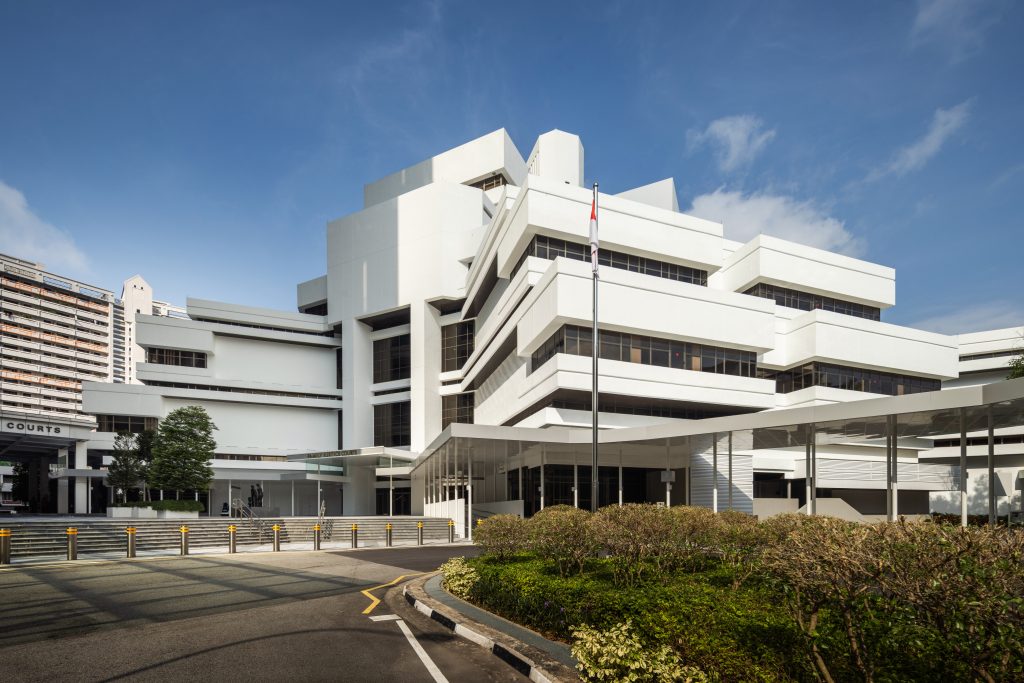
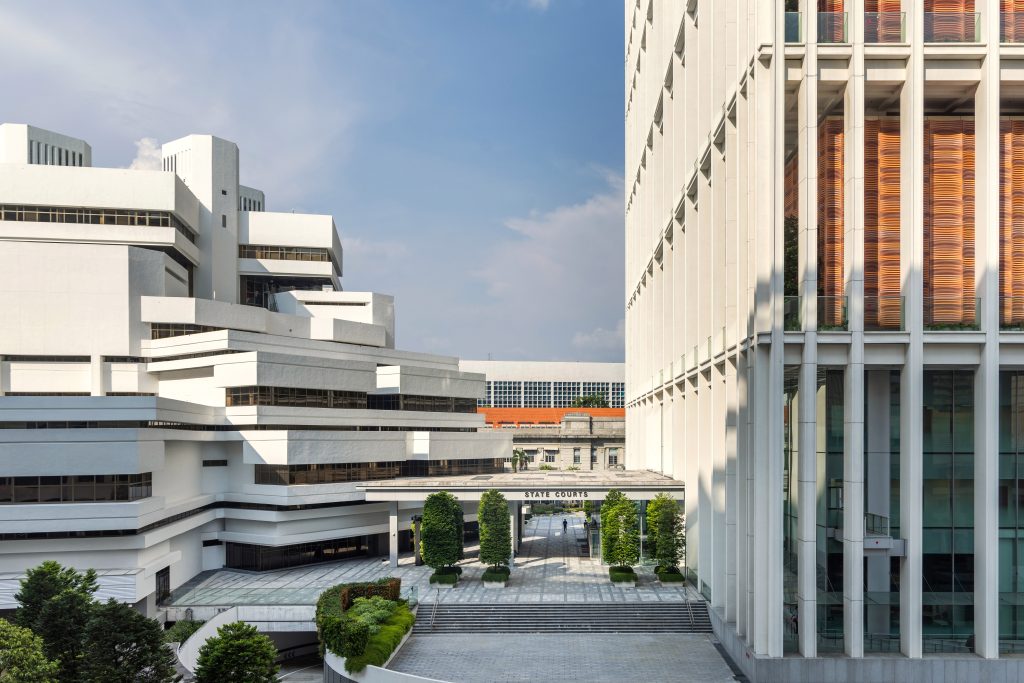
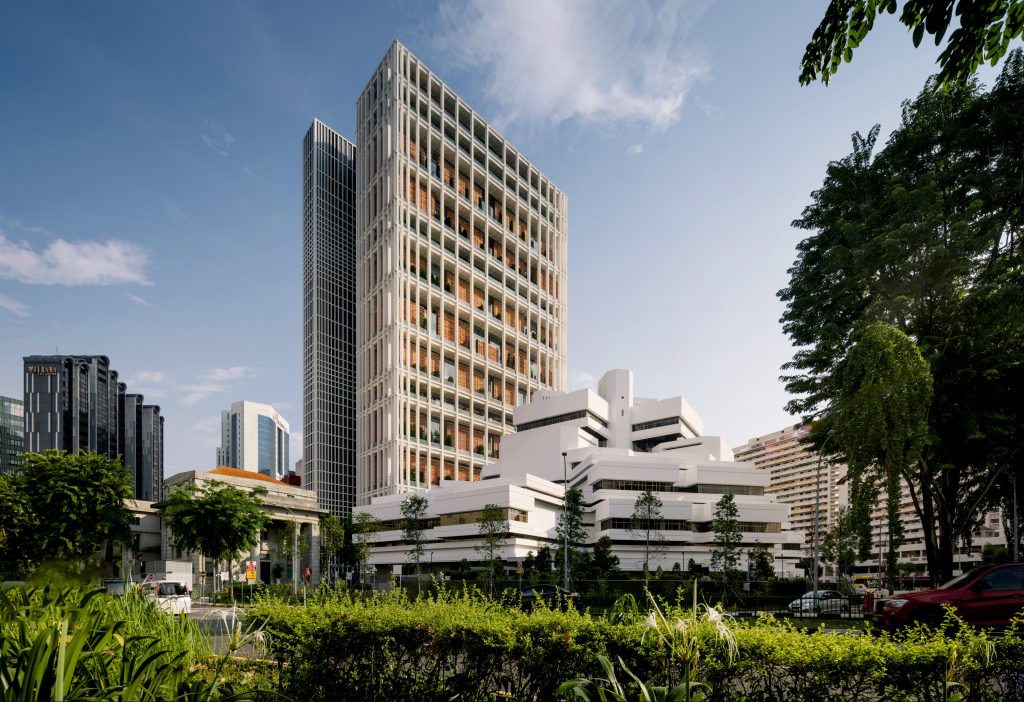
Constructed in 1975, the Octagon is a rare example of a post-war building gazetted for conservation in 2013, recognised for its distinctive brutalist architectural features. Preserving the essence of the original design is central to any conservation project, especially for a building like the Octagon, with its iconic eight-sided stepped exterior form and voluminous interior atrium. CPG’s multidisciplinary team ensured that architectural and structural interventions, along with a comprehensive overhaul of mechanical and electrical systems, were carefully modernised unobtrusively.

Increasing Functional Space
In 2014, the Family Courts were restructured into a separate judicial body known as the FJC under the Family Justice Act. Prior to the move to Octagon, FJC was operating from two separate locations. To centralise operations in a single location, additional functional space was required within the Octagon. This was achieved through the careful insertion of floor slabs to create additional floor area within the building’s internal volume. As a result of the move, the number of courtrooms for the FJC increased from 12 to 25, and chambers from 21 to 52 respectively. The expansion also accommodated specialised facilities, including child-friendly interview rooms, quiet rooms for distressed adults and children and vulnerable witness rooms to allow for remote testimony in hearings.
Redefining the Court Space: A Therapeutic Approach
While the scale and character of the Octagon before the refurbishment suited the State Courts well, the Family Justice Courts handle sensitive matters, primarily serving vulnerable groups such as children, the elderly, and women. The transformation was driven by the Therapeutic Justice (TJ) philosophy — a holistic, problem-solving approach that shifts the focus of the judicial process from pure adversarial conflict to achieving positive and sustainable social outcomes for families. Spaces were made warm, comforting and protective. This non-adversarial environment is a core architectural element of the TJ framework, crucial for reducing trauma and fostering the emotional safety required for the court process to be effective.
Wayfinding
Wayfinding was significantly improved and further enhanced by dividing the Octagon into distinct green and blue zones for easier orientation. Each zone is clearly defined through a cohesive use of colour-coded elements ranging from signage, furniture, carpets, to acoustic panels. This cohesive design language ensures a clear and intuitive navigation experience throughout the building.


Conservation in Action: Honouring the Past Through Design and Detail
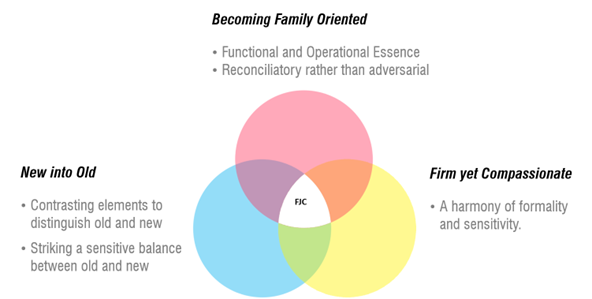
Conservation was a central focus of the project, with the design team thoughtfully restoring the distinctive architectural features of the Octagon while introducing modern interventions through a deliberate balance of contrast and harmony. This sensitive integration of old and new allows the Octagon to retain its historical narrative, even as it fulfils the functional demands of a contemporary courthouse. The result is a building that honours its heritage through design and detail, while confidently embracing its future.
- Revitalised Atrium
Flying Staircases – At the heart of the atrium are the expressive flying staircases, a prominent architectural feature that has been carefully conserved for both its functional value and historical significance. These staircases provide vertical circulation, reducing dependence on lifts. From their vantage point, the open corridors surrounding the atrium are clearly visible, symbolising the transparency and openness central to the judicial process.

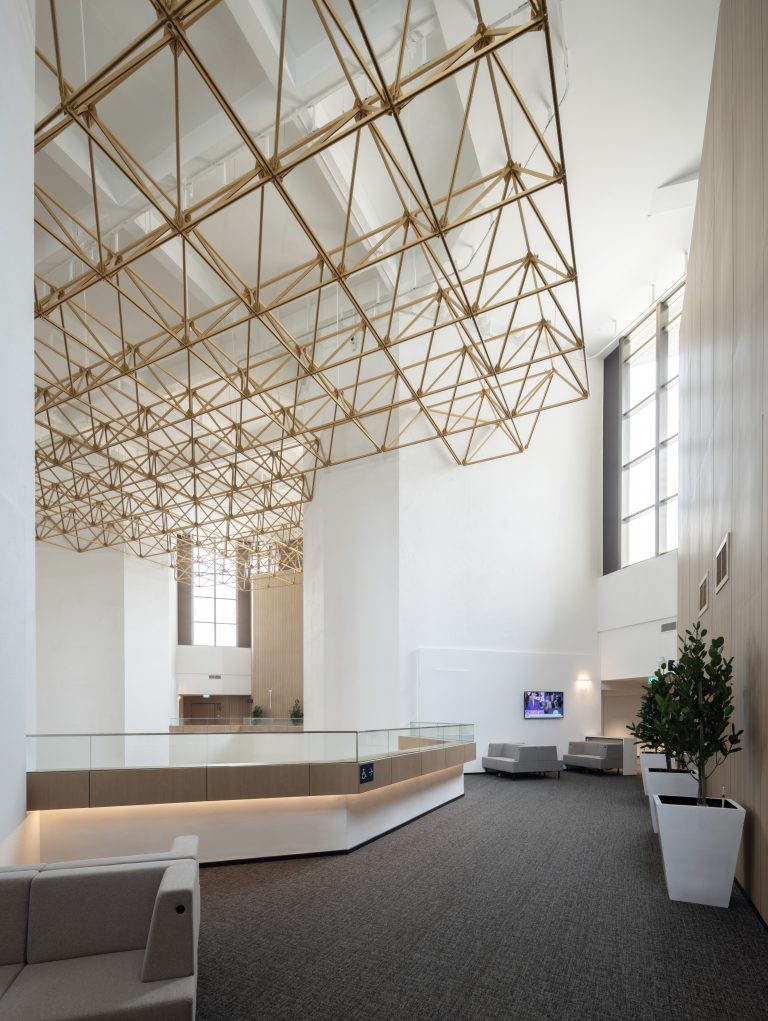
Space Frame – The atrium of the Octagon features a striking space frame comprising of interlocking struts arranged in a geometric pattern, a design choice that reflects the architectural movements of the 1970s. The space frame was conserved and finished with a new coat of paint.
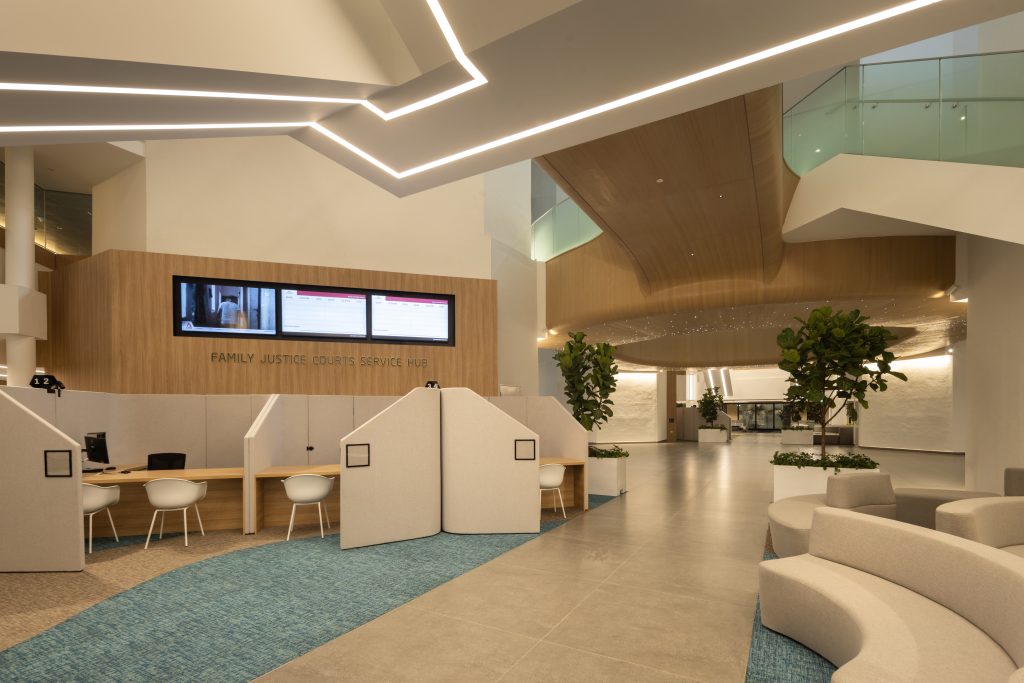
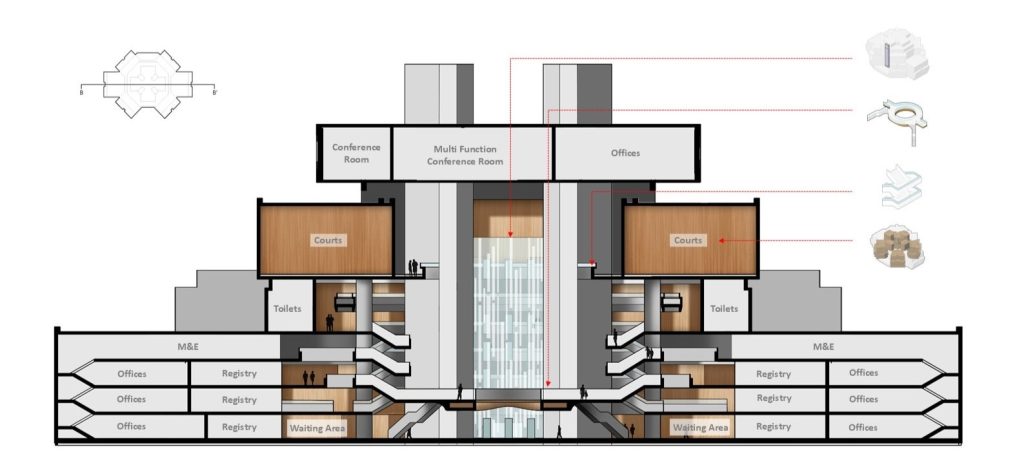
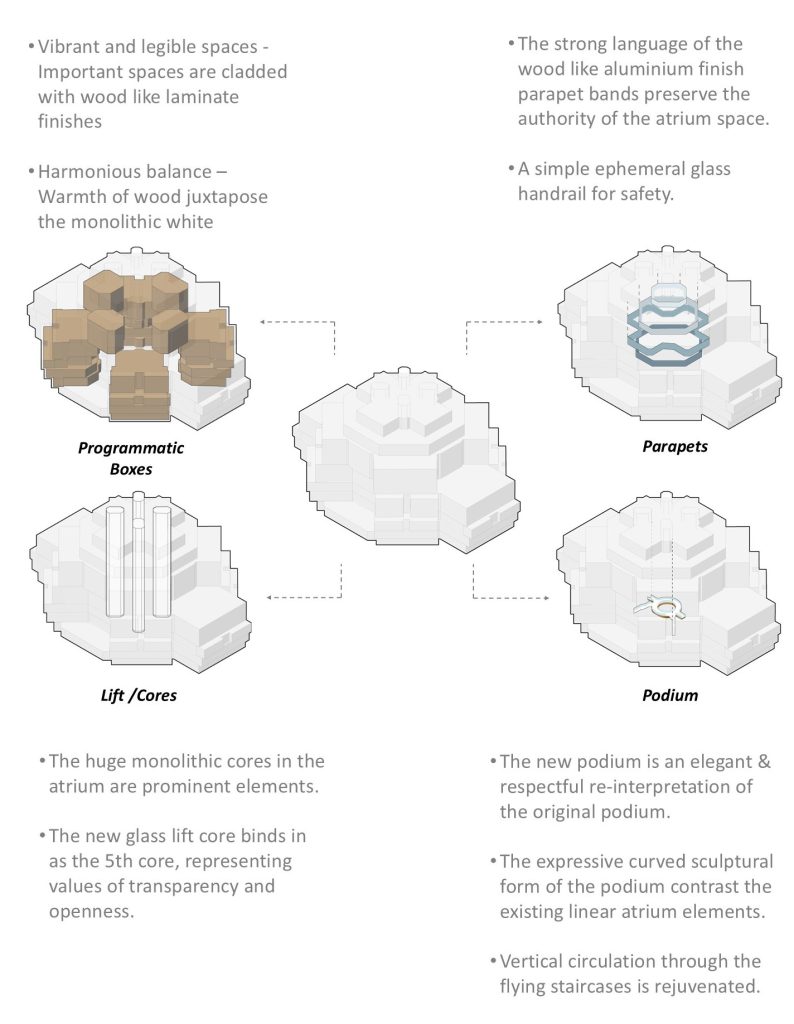
The Podium – With the removal of the Criminal Mentions Court from the centre of the atrium, the building’s ground floor was transformed into an open, welcoming and accessible space. In its place, a new curved sculptural podium was introduced between the second and third storeys, a contemporary reinterpretation of the original raised platform. This architectural intervention enhances vertical circulation and cross-connectivity within the atrium and to the flying staircases.
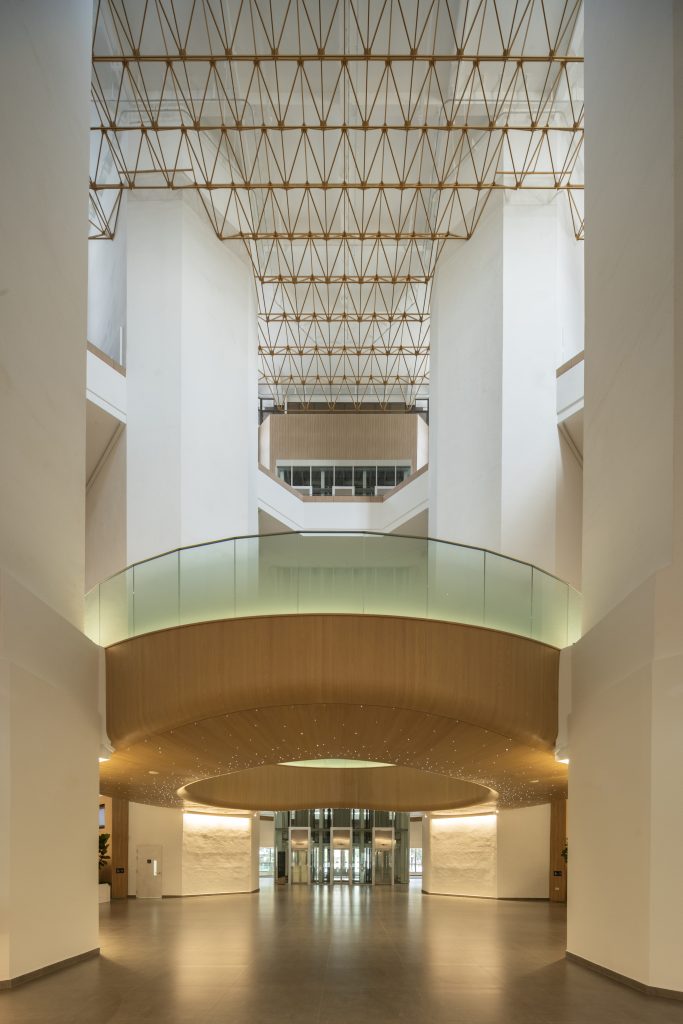

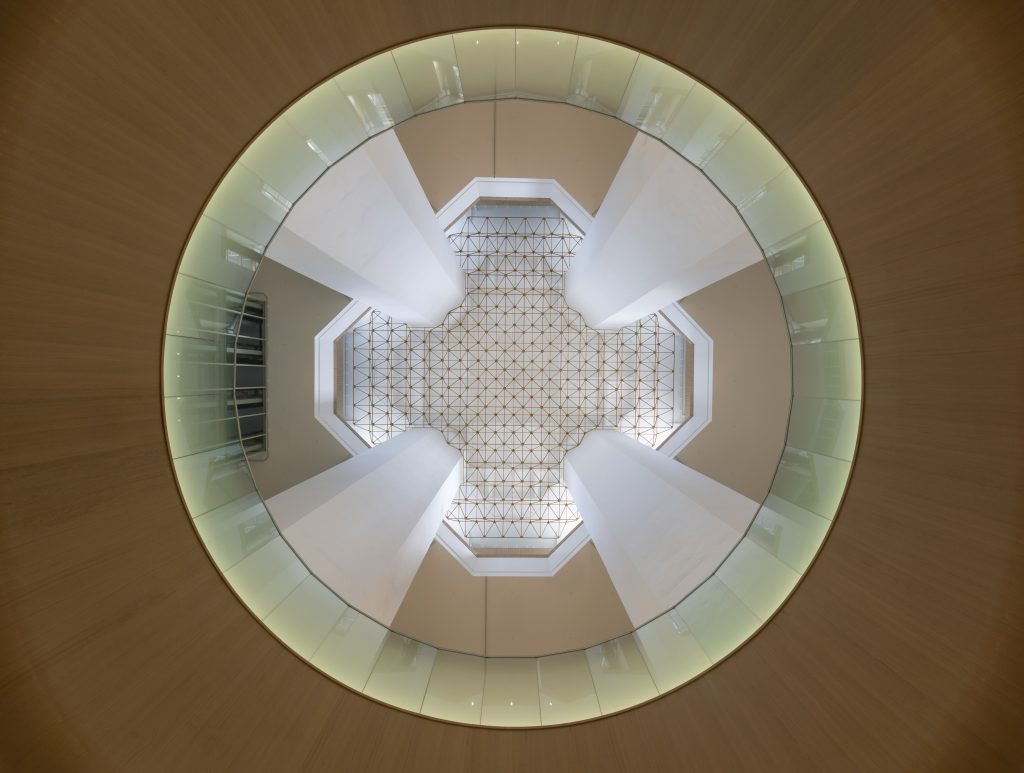
A large circular void at the centre of the new podium elegantly frames the view of the Space Frame from the ground floor. As a tribute to the building’s heritage, arabescato marble flooring from the original raised podium was carefully salvaged, polished, and reinstalled, preserving its timeless beauty on the new podium.
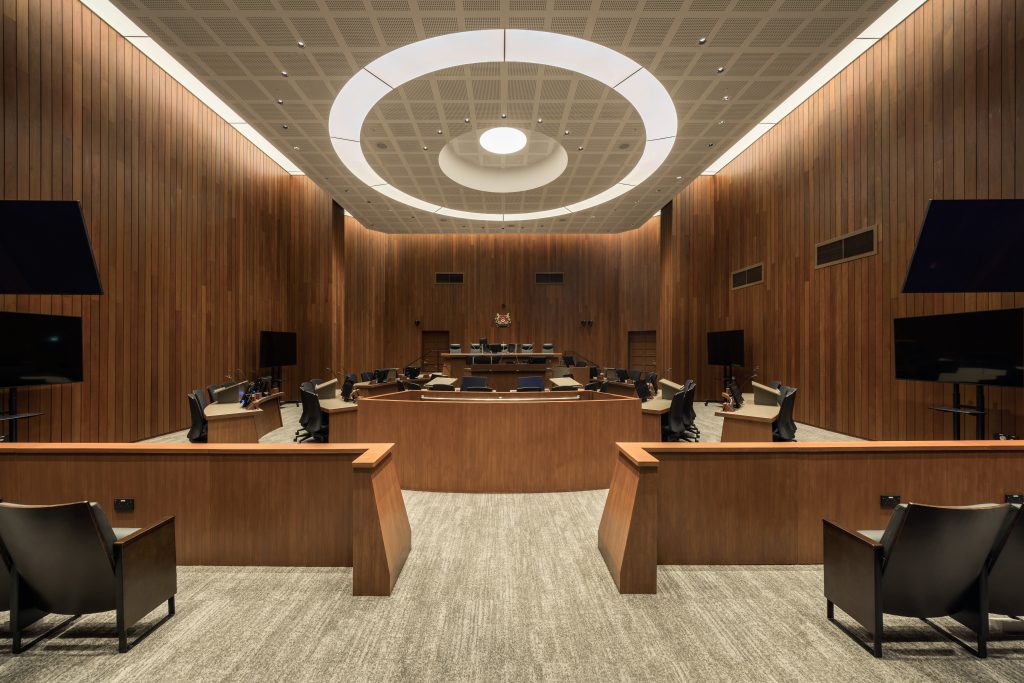
Heritage Court – Once known as Court 1 of the State Courts, the courtroom has been restored and renamed as the “Heritage Court”. Measuring 220 square metres, the Heritage Court is a fully functional modernised courtroom that effortlessly combines the former courtroom’s design with the modern courtroom standards of today. It features original timber wall slats, which were taken from old courtrooms, and were treated and reused in the Heritage Court. Approximately 500 square metres of conserved timber slats were used, preserving the timeless appeal of the original wood.

Environmental Sustainability
The refurbished FJC is an environmentally sustainable building, equipped with modern mechanical systems such as a pre-cooled fresh air system, a chilled-water system (tapped from State Courts Towers), and passive displacement ventilation. In recognition of its green features, the building was awarded the BCA Green Mark Platinum Award for Existing Non-Residential Buildings (ENRB:2017) in 2022.
A Unified Judiciary Cluster
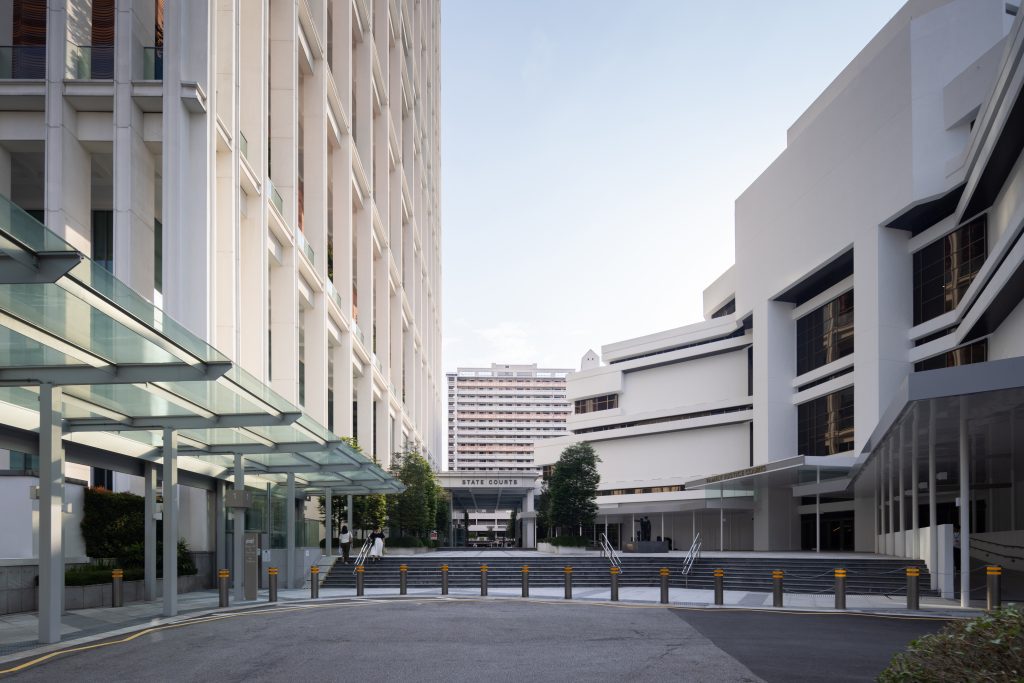
The refurbished FJC and State Courts were designed as a unified judiciary cluster, fostering greater synergy and operational efficiency between the two buildings. A shared roundabout with dedicated pick-up and drop-off zones, along with a new covered linkway designed to echo the Octagon’s distinctive horizontal banding, provides a seamless and sheltered connection between the buildings, enhancing accessibility and convenience for all users.
This project reflects CPG’s commitment* to conservation and adaptive reuse. Together, these principles safeguard the historical and cultural fabric of a nation’s built environment, while sensitively adapting it to meet contemporary needs – ensuring our built heritage remains relevant, functional and sustainable in a rapidly evolving world.
*CPG served as Principal Consultant, Architect and Engineers for the State Courts – a bold high-rise courthouse, and Supreme Court – a contemporary interpretation of Singapore’s original 1930s neoclassical courthouse. The completion of the newly refurbished Family Justice Courts marks a significant milestone in the 21st-century modernisation of the trilogy of Courts that form the the Singapore Courts, representing the latest chapter in CPG’s enduring legacy of shaping Singapore’s civic and judicial landscape.
For media enquiries, please contact:
Tia Kai Yen
Vice President, Corporate Communications
CPG Corporation Pte Ltd
Tel: 6357 4034 / 9276 6077
Email: tia.kai.yen@cpgcorp.com.sg
Ashley Wu
Senior Manager, Corporate Communications
CPG Corporation Pte Ltd
Tel: 6357 4890 / 9824 4447
Email: ashley.wu@cpgcorp.com.sg
About CPG Consultants Pte Ltd
CPG Consultants provides integrated consultancy services for the built environment industry. With a strong local heritage and solid global presence, we bring our unique design philosophy and multidisciplinary approach to projects in Singapore and other cities worldwide. We draw inspiration for the future from four macrotrends which we believe will form the design core of tomorrow’s cities: sustainability, resilience, digital, and climate.
We focus on redefining spaces while respecting the local environment and enhancing future-proof adaptability. Our expertise and solutions span the full suite of professional consultancy services that includes architecture, engineering, urban planning, climate resilience, decarbonisation, and more.
To learn more about CPG Consultants, please visit https://www.cpgconsultants.com.sg/ or follow us on Facebook and LinkedIn
APPENDIX A – PROJECT FACT SHEET
Family Justice Courts
Building Type:
Judiciary/Courthouse
Project Location:
3 Havelock Square, Singpoare 059725
Name of Client:
Singapore Courts
Country:
Singapore
Year of Completion:
2024
Operation Start Date:
25 November 2024
Gross Floor Area:
37,400m²
The new FJC building has 25 courtrooms and 52 chambers, designed to address the specific needs of family-related cases.
PROJECT TEAM
Principal Consultant & Architect | CPG Consultants Pte Ltd |
Principal Design Consultant | CPG Consultants Pte Ltd |
Project Management | PM Link Pte Ltd |
Civil & Structural Engineering | CPG Consultants Pte Ltd |
Mechanical & Electrical Engineering | CPG Consultants Pte Ltd |
Quantity Surveyor | CPG Consultants Pte Ltd |
Site Supervisory Team | Construction Professionals Pte Ltd |
Interior Design Consultant | CPG Consultants Pte Ltd / SCA Design Pte. Ltd (Ong & Ong) |
Special Lighting Consultant | Ong & Ong Pte. Ltd |
Security & Blast Consultant | Certis Cisco Consulting Services Pte. Ltd |
Conservation Consultant | Franz Wood ASA Pte. Ltd |
Facade Consultant | HCCH Consulting Pte. Ltd /Building Facade Grp |
Landscape Consultant | Plantwerkz Pte. Ltd |
Acoustic & AV Systems Consultant | Alpha Acoustics Engineering Pte. Ltd |
Signage & Wayfinding Consultant | Endpoint APAC Pte. Ltd |
Environmental Sustainability Design Consultant | Surbana Int’l Consultants Pte. Ltd |
Key Design Features of the Family Justice Courts
- Emotive Transformation
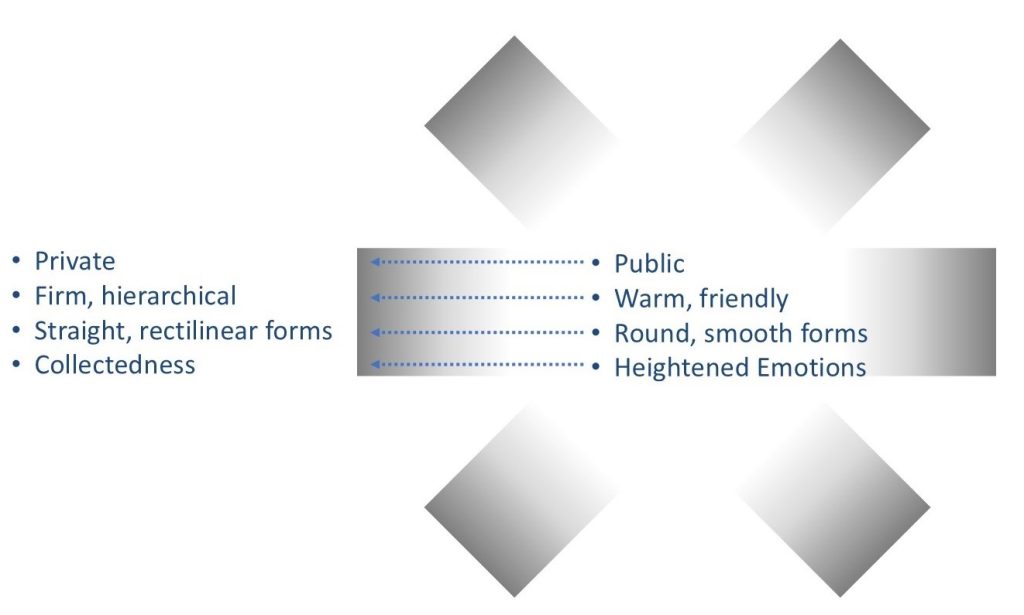
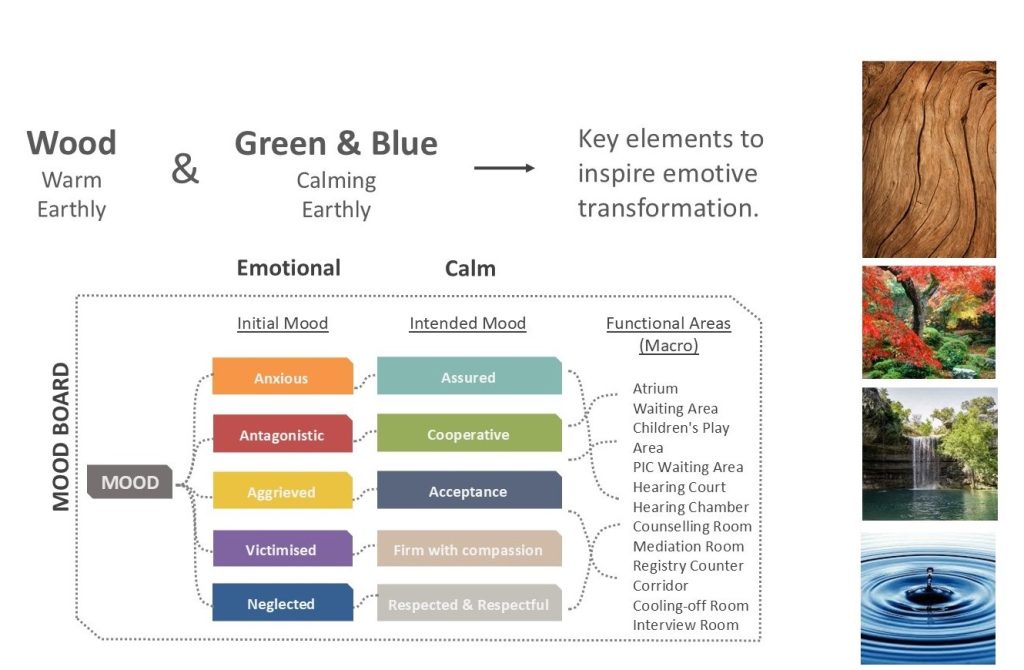
While the original spatial qualities have been preserved, new materiality and lighting were introduced to soften the overall environment. Warm timber finishes convey a sense of comfort and calm, while intimate, human-scaled waiting areas adjoining the atrium offer a more personal experience, complete with play boards to engage children. Courtrooms and related facilities are visually distinguished from the rest of the building through the use of timber-like cladding, creating a warm contrast against the predominantly white walls and ceiling of the Octagon. Compared to the original double-volume courtrooms of the former State Courts, the new FJC courtrooms are smaller in scale and lower in height, fostering a setting that is firm yet compassionate, upholding gravitas essential for justice.
The newly refurbished FJC is a place of transformation. The environment is thoughtfully crafted to reflect a journey, guiding individuals along a gradual progression from one physical and mental state to another. This sense of transition is woven throughout the building’s interior environment, supporting and guiding individuals through a process of change and resolution.
- Re-interpretation of the Atrium
- Accessibility
The Octagon was designed with staircases as the primary means of vertical circulation, supplemented by lifts. The courthouse typology employs a distinct circulation strategy that ensures the separation of the public, staff and persons-in-custody to maintain security. These circulation pathways only converge within the courtroom. Staff and persons-in-custody utilise dedicated corridors and staircases on intermediate floors to access the courtroom while maintaining strict segregation throughout the building. However, current accessibility regulations require all habitable spaces to be barrier-free, making the original staircase-reliant design untenable. Through meticulous planning, a network of new staircases and corridors, along with double the number of lifts, were introduced, ensuring that all circulation zones meet accessibility standards.


All lifts were previously located within the four monolithic white cores of the atrium. However, the lack of paired lifts led to long waiting times. Three new public glass lifts were introduced within a glass enclosure as a fifth core, embodying the values of transparency and openness while improving vertical circulation efficiency.
- Treatment of the Youth Court and High Court (Family Division)
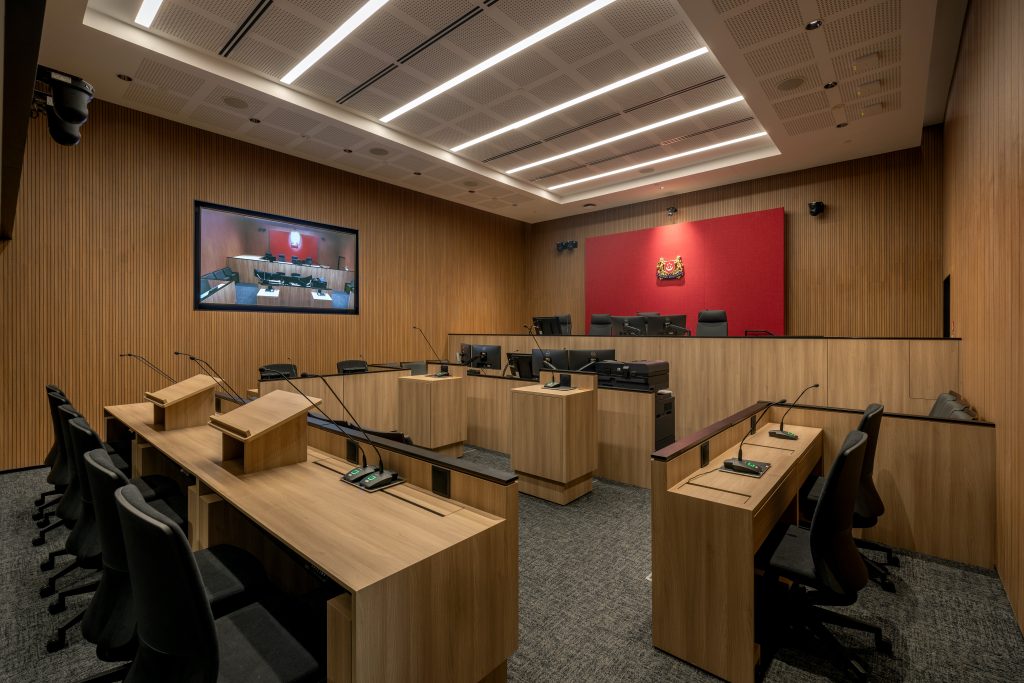
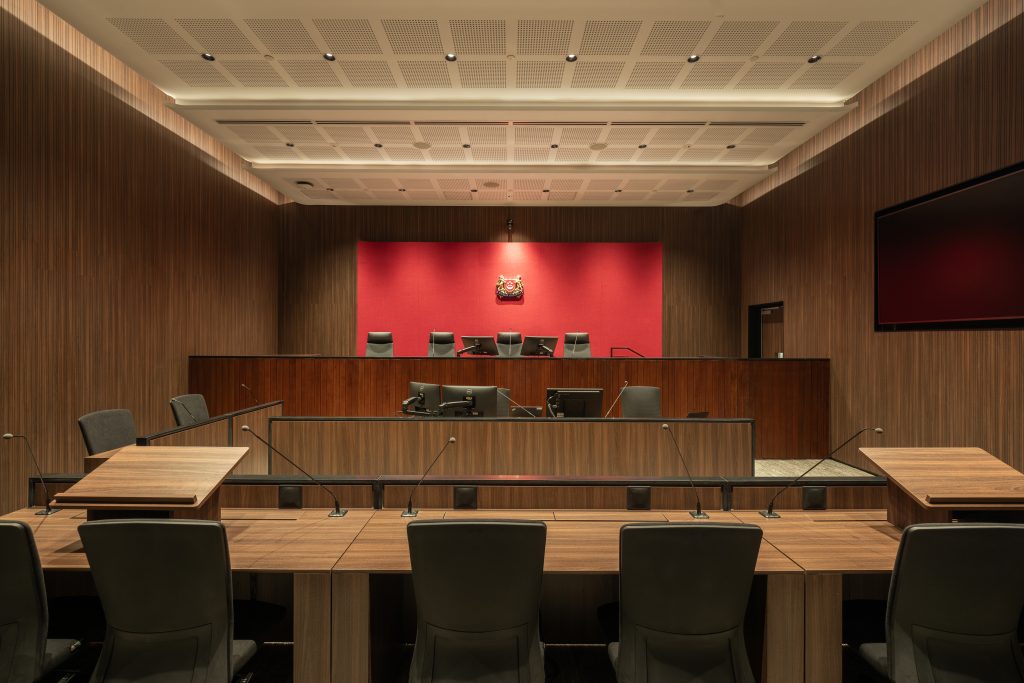
A prominent red backdrop, projecting from the wall and detached from the ceiling, enriches the courtroom’s spatial composition. This deep hue, reflective of the Singapore Courts’ corporate identity and national symbolism for universal justice, instils the space with gravitas and solemn dignity. Timber acoustic panels line the courtroom walls, introducing visual warmth reduce reverberation. Customised movable benches allow for flexible layouts tailored to different hearing formats and procedural needs. To distinguish the High Court, a darker palette of timber-like acoustic panels in varying widths is used, complemented by a tiered false ceiling that funnels focus on the judge’s bench. Quartz trims on the benches add a sense of refinement and gravitas. Timber strips from the former State Courts’ courtrooms, have been repurposed for the HCFD courtrooms judge’s bench, bridging past and present through material continuity.