
CPG at FMAC 2026: Advancing Sustainable Built Environments
How can existing buildings become part of the climate solution? Can facility management do more than simply operate buildings? And what does it take to create built environments that remain sustainable throughout their entire lifecycle?
These were some of the questions explored at the 5th Facility Management Asia Conference (FMAC 2026), held in Kuching, Sarawak, Malaysia, from 29 June to 1 July 2026. Organised by the Malaysian Association of Facility Management (MAFM), the conference brought together industry leaders from across Asia to exchange ideas on sustainable facilities management, ESG and the transition towards a low-carbon future.
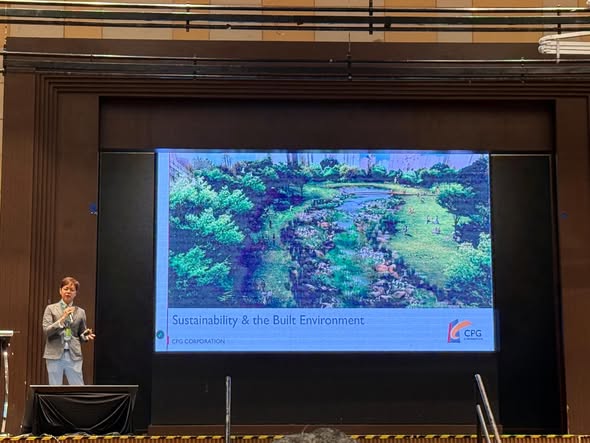
At the invitation of our Sarawak partner, Sanjung Etika, CPG participated in FMAC 2026, where Gavin Chan, Head of Sustainability and Senior Vice President of CPG Green, shared how Singapore’s sustainability journey is evolving beyond designing greener buildings towards managing carbon across the entire lifecycle of the built environment. His session explored how facility management, design and long-term asset stewardship must work together to create places that are not only efficient today, but resilient for decades to come.
Looking Beyond Individual Buildings
One of the strongest messages from the conference was that achieving net zero is no longer about improving individual buildings in isolation. Real progress comes from connecting planning, design, construction, operations and maintenance into a single lifecycle strategy.
This shift also changes the role of facility management. Rather than becoming involved only after a building is completed, FM should be considered from the earliest stages of design, helping shape buildings that are easier to maintain, more efficient to operate and better for the people who use them.
Building New Value Through Adaptive Reuse
To illustrate this approach, Gavin shared the transformation of Limbang Shopping Centre. Instead of demolishing and rebuilding, the project retained much of the existing structure, significantly reducing embodied carbon while giving the development a new lease of life.
The project is a reminder that sustainability is not always about building something new. Sometimes, the greatest environmental impact comes from making better use of what already exists. Together with passive design strategies such as natural ventilation and daylighting, the redevelopment demonstrates how thoughtful refurbishment can extend asset life while lowering both carbon emissions and operating costs.
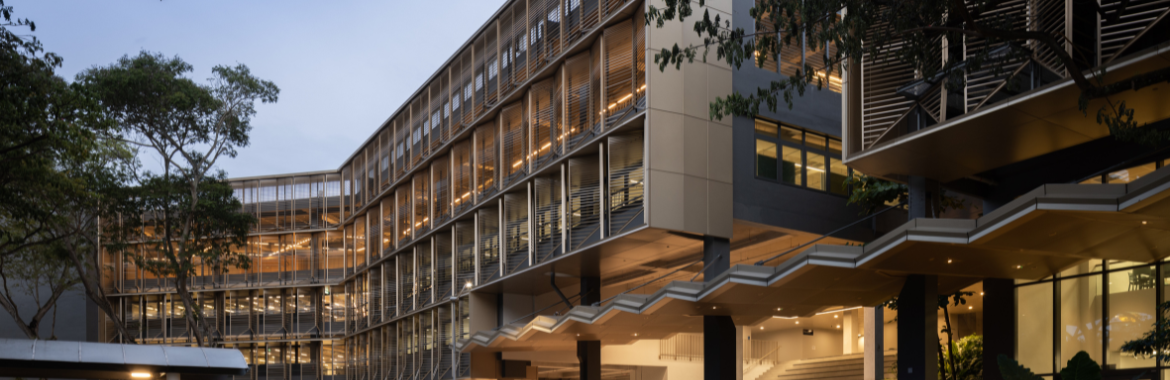
The award-winning NUS School of Design and Environment (SDE) 1 & 3 offers another perspective on whole-life sustainability. Combining adaptive reuse, passive tropical design, smart technologies and hybrid cooling, the project minimises both embodied and operational carbon from the outset.
The conversation also extended beyond individual buildings to the district scale, where integrated planning of energy systems, infrastructure and operations can unlock greater carbon reductions than isolated building-by-building improvements.

Continuing the Conversation
FMAC 2026 provided an excellent platform to exchange ideas with industry peers across the region. As Southeast Asia continues to invest in new cities, infrastructure and industrial developments, there is tremendous opportunity to combine local knowledge with shared regional experience to create more sustainable and resilient communities.
CPG looks forward to continuing these conversations with partners across the region as we work together towards a net-zero future.